
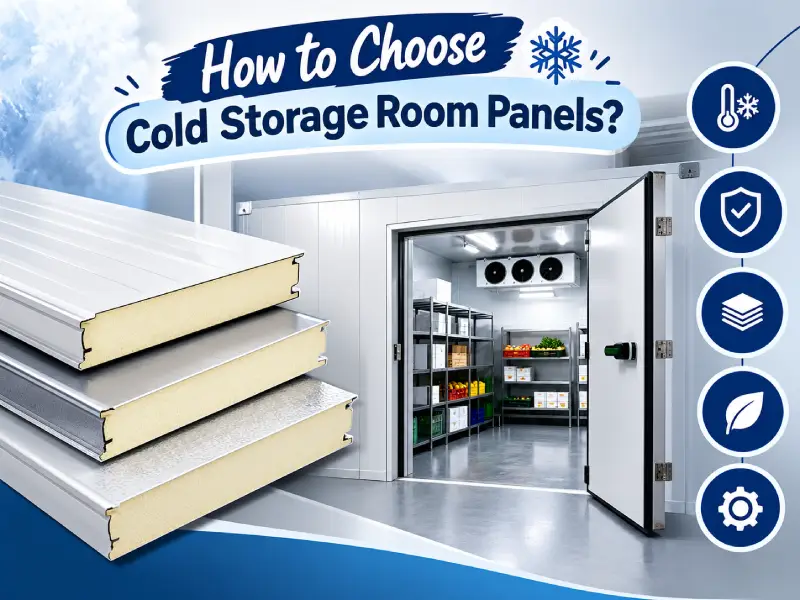
Cold storage rooms are essential for maintaining the quality and freshness of temperature-sensitive products such as fruits, vegetables, dairy items, medicines, frozen foods and other perishable goods. The performance of a cold storage facility largely depends on the quality of its insulation panel. When choosing the right panel helps maintain stable temperatures, reduce energy consumption, and improve the overall efficiency of the storage room. While selecting the right option can sometimes be confusing with different thicknesses, materials, and designs available in the market. If you are looking for a reliable Puf Panel Sheet, understanding insulation, durability, installation and maintenance requirements can help you make a better decision.
1. Understand Your Temperature Requirements
The first step in selecting cold storage panel is to identify the temperature range required inside the room. A Chilled storage generally requires different insulation performance compared with frozen storage. The panel should be capable of maintaining the required temperature without excessive heat transfer.
In cold applications, thick and high-quality insulated panels are often preferred as they have better thermal resistance. Before purchasing, determine whether the room will be used for vegetables, dairy products, frozen foods, pharmaceuticals, or another temperature-sensitive application.
2. Choose the Right Insulation Material
While insulation is one of the most important factors in assuring efficient cold storage operations. One of the most commonly used types of insulation is Polyurethane Foam, or PUF, which has excellent thermal insulation properties. A good insulation core can minimize heat transfer and help maintain consistent internal temperatures.
When comparing different products, check the density, insulation performance, surface finish and manufacturing quality. Choosing a dependable PUF Panel Manufacturer in Jaipur can also make it easier to get panels suitable for local climatic conditions and specific project requirements.
3. Select the Appropriate Panel Thickness
The Panel thickness should be selected according to the operating temperature and application. A panel that is too thin may not provide sufficient insulation, while unnecessarily thick panels can increase project costs.
While discuss your requirements with the manufacturer and select the thickness based on the desired temperature, room size, product type, and expected usage. A proper thickness can contribute to better energy efficiency and long-term performance.
4. Check Panel Strength and Durability
The Cold storage panels should be strong enough to withstand regular use, cleaning, and environmental conditions. The outer surface should resist moisture, corrosion, and general wear.
These high-quality panels should also have properly finished edges and reliable joining systems. While strong construction reduces the possibility of air leakage and helps maintain insulation performance over time.
5. Consider Installation and Joint Quality
If put improperly, even the greatest insulating panel won’t work well. The unwanted air movement and temperature loss can be avoided through properly aligning, sealing and connecting.
When choose panels designed for quick and accurate installation. A professional installation team can ensure that walls, ceilings, corners, doors, and joints are properly sealed.
6. Compare Quality Before Looking at Puf Panel Price
The budget is an important consideration, but price should not be the only deciding factor. When comparing Puf Panel Price Calculator, evaluate insulation quality, panel thickness, durability, surface finish, installation requirements, and expected service life.
A low-cost panel may appear economical initially but can result in higher energy consumption or maintenance expenses later. The long-term benefit will be boosted through choosing high-quality insulation.
7. Think About Future Requirements
Your cold storage needs may increase as your business grows. Therefore, consider whether the selected panel system can be modified, expanded, or relocated in the future.
A modular panel systems can be particularly useful because they can simplify expansion and reduce construction time. This makes them suitable for warehouses, food processing units, pharmaceutical facilities and commercial storage applications.
8. Explore Ready-to-Install Solutions
The prefabricated solutions can be a practical choice for businesses that need a functional space quickly. While Readymade Rooms are manufactured using pre-engineered components and can generally be installed faster than conventional construction.
When such solutions can be useful for temporary facilities, site offices, storage areas and other applications where speed and flexibility are important.
9. Choose Panels From a Reliable Manufacturer
The manufacturer’s experience and product quality can significantly affect the performance of your project. Before placing an order, check product specifications, manufacturing standards, customization options, installation support, and after-sales service.
If you also require compact site facilities, readymade guard rooms can provide a convenient alternative to conventional construction. Selecting a manufacturer that offers dependable products and professional support can make the complete process easier.
Conclusion
Whenever selecting the right cold storage room panel requires careful evaluation of temperature requirements, insulation quality, thickness, durability, joints, installation, and overall cost. Instead of choosing a product based only on its initial price, focus on long-term performance, energy efficiency and reliability. The right panel solution can help maintain consistent temperatures and protect valuable stored products. For businesses looking for dependable insulated sandwich panel and modular construction solutions, Pronto Panels can be a suitable choice for quality-focused projects.

