
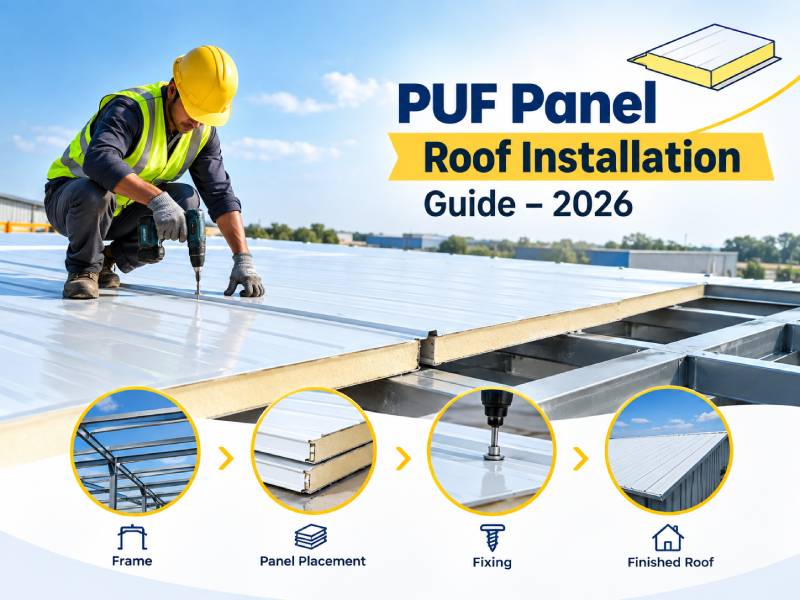
Modern construction is increasingly focused on faster installation, energy efficiency, durability, and cost-effective building solutions. PUF roofing has become a practical option for industrial, commercial, warehouse, agricultural, and institutional structures. These panels can help create comfortable indoor environments while reducing installation time with improved insulation properties and lightweight construction. While choosing reliable PUF Panels Manufacturers is an important step because panel quality directly affects roof performance and service life. A proper installation process is equally essential to prevent leakage, maintain structural strength and achieve effective thermal insulation. This guide explains the important steps, materials, tools, and considerations involved in installing a PUF panel roof in 2026.
What Is a PUF Panel Roof?
A PUF panel roof is made using polyurethane foam insulation sandwiched between protective metal sheets. The core provides thermal insulation, while the outer layers offer strength and weather resistance.
These panels are commonly used for factories, warehouses, cold storage facilities, workshops, commercial buildings, and temporary structures. Their lightweight nature can also reduce the load placed on the supporting structure.
Step 1: Inspect the Supporting Structure
While before installation begins, check the roof structure carefully. The supporting framework should be properly aligned, level, and capable of carrying the required load.
First, check the purlins, spacing, connections, and overall structural condition. Then any misalignment should be corrected before placing the panels. After that accurate measurements at this stage can help prevent installation problems later.
Step 2: Select the Right Panel Sheet
When selecting the correct PUF Panel Sheet depends on the building’s purpose, climate, insulation requirement, panel thickness, and structural design.
Consider factors such as:
- Panel thickness
- Metal sheet quality
- Insulation density
- Roof slope
- Joint design
- Corrosion resistance
- Required thermal performance
While selecting an appropriate insulation thickness can be particularly important for areas with extreme temperatures.
Step 3: Prepare the Roof Panels
Before lifting the panels, inspect them for dents, scratches, damaged edges, or manufacturing defects. While keep the material on a clean and level surface and protect it from moisture.
Whenever possible drag the panels across each other when handling them. When choose suitable lifting gear and follow the maker’s handle recommendations to reduce the risk of surface or edge damage.
Step 4: Start the Installation
Its position the first panel according to the approved roof layout. A proper alignment of the first panel is critical because subsequent panels will follow its position.
When fix the panel to the supporting structure using suitable fasteners. The fasteners should be correctly positioned and tightened without damaging the outer metal sheet. Then, continue installing adjacent panels while maintaining consistent alignment and joint engagement.
Step 5: Seal the Joints Properly
The process of weatherproofing is a key aspect of roof installation. It is essential that the seams of the roof panels be securely joined together with the appropriate sealing products. While special consideration should be given to the intersections of the roof panel, roof edges, penetrations, drainage structures and flashings. A lack of moisture in the roof structure and insulation system might result from improper sealing techniques.
Step 6: Plan Rooftop Construction Carefully
A successful Rooftop construction requires coordination between structural work, panel installation, drainage, electrical penetrations, ventilation, and other building services.
While avoid unnecessary cutting or drilling after installation. The necessary apertures should be scheduled ahead of time and appropriately flashed and sealed.
Roof Panel Cost
The project budgeting should include panels, fasteners, accessories, transportation, labour, structural requirements, and installation expenses. A puf panel price calculator can provide an initial estimate based on panel dimensions, thickness, quantity, and other project inputs.
However, the final project cost may vary depending on site conditions, specifications, transportation distance, and installation requirements. Therefore, a detailed quotation should be obtained before finalizing the project budget.
Why Panels Are Used
Sandwich Panels combine insulation and protective layers into a single building component. This construction can simplify installation while providing thermal insulation and weather protection.
They are particularly useful where quick construction and controlled indoor temperatures are important. Their application can range from industrial roofs to commercial buildings and specialized facilities.
Common Installation Mistakes to Avoid
First, choose clear of employing broken panels, the wrong fasteners, misaligned joints, inadequate sealing, and incorrect handling. Another common mistake is ignoring drainage requirements.
The regularly check panel alignment during installation rather than waiting until the entire roof is completed. A few errors can become more difficult and expensive to correct later.
Conclusion
A properly planned PUF panel roof can offer a combination of insulation, durability, faster installation, and practical maintenance for modern buildings. The entire installation stage contributes to long-term performance from checking the supporting structure to selecting suitable materials and sealing every joint perfect way. The building owners should work with experienced professionals and select panels according to project-specific requirements. Pronto panels can be considered as part of a quality-focused approach to modern construction projects for dependable roofing and insulation solutions.

